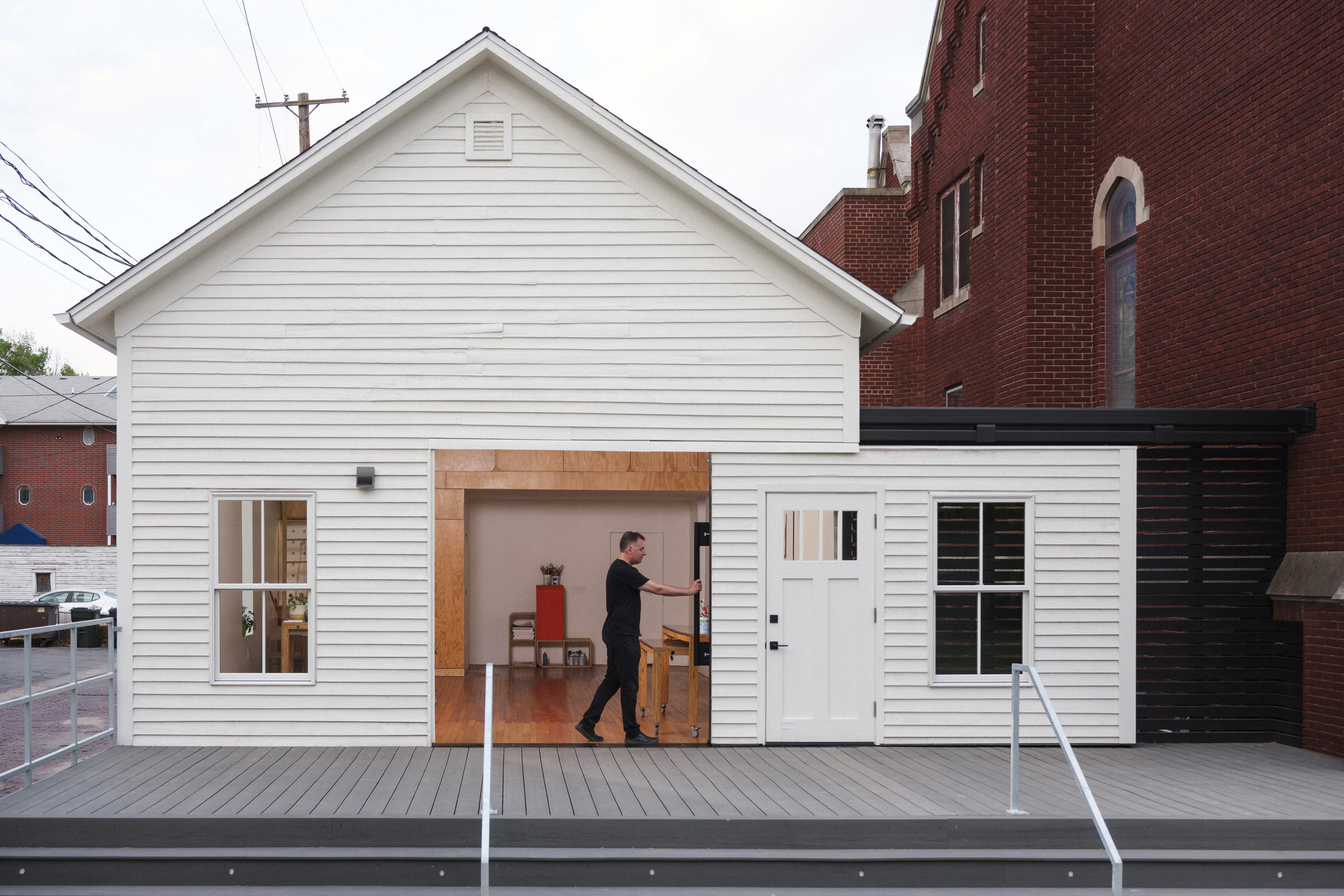


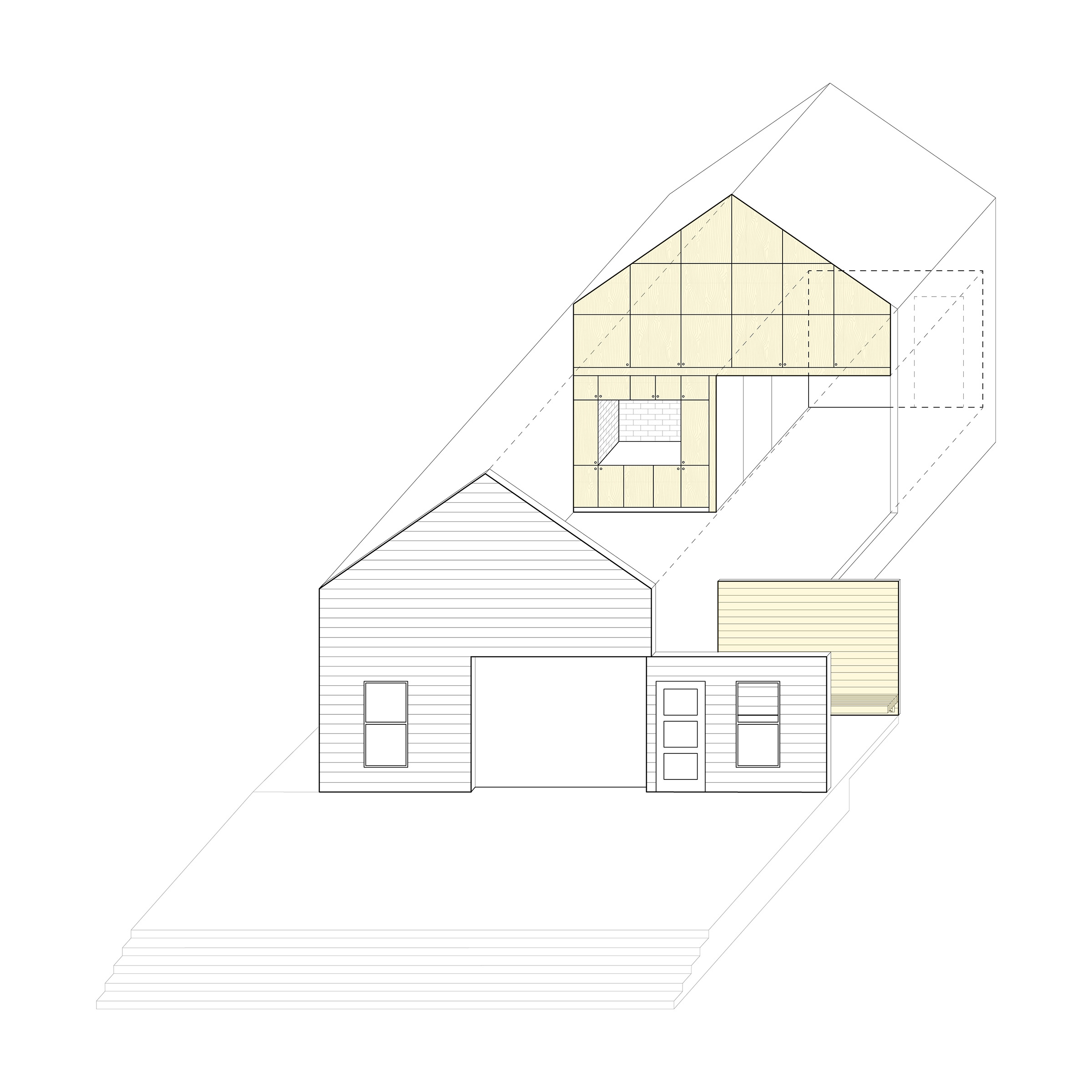
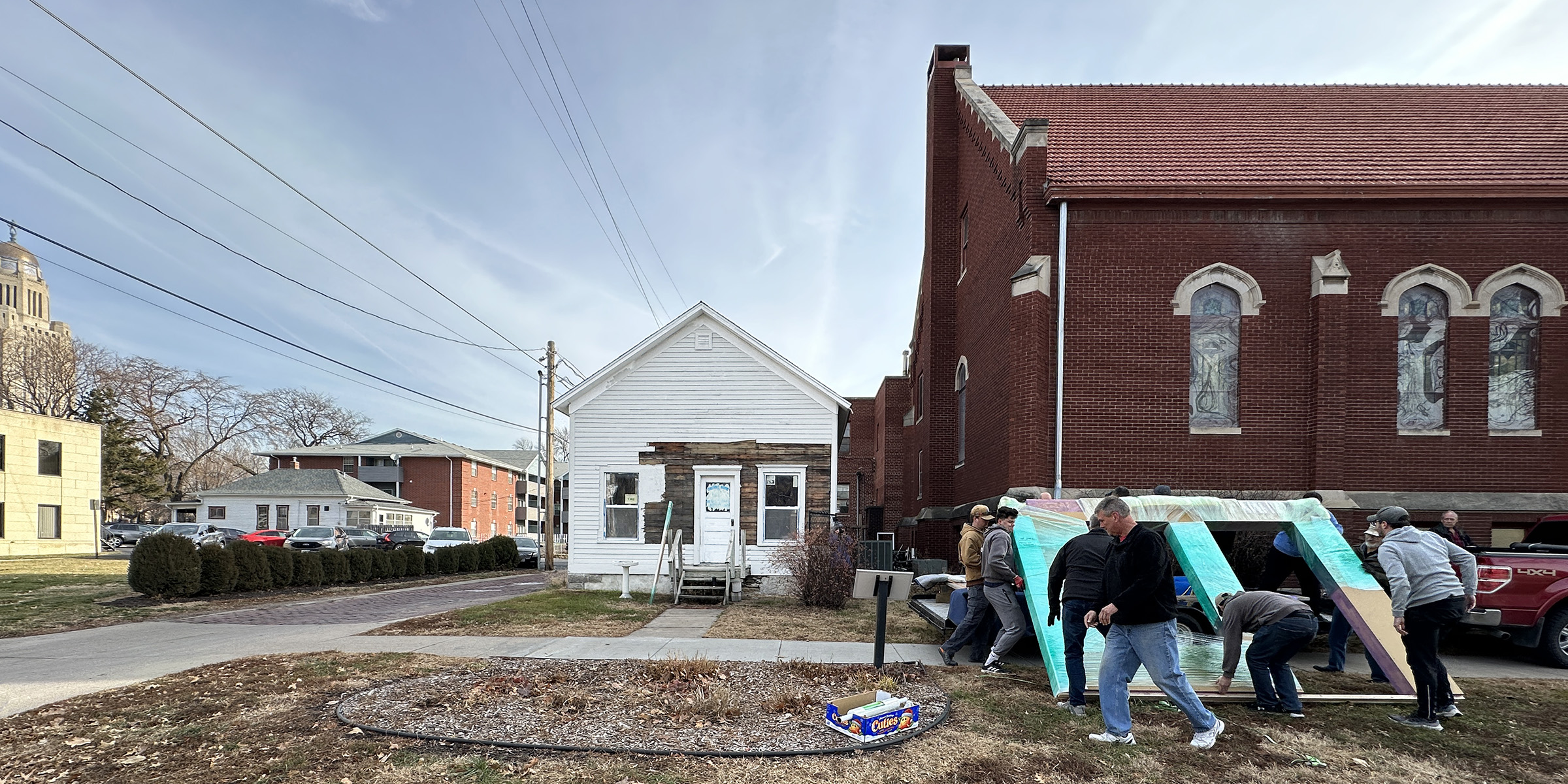
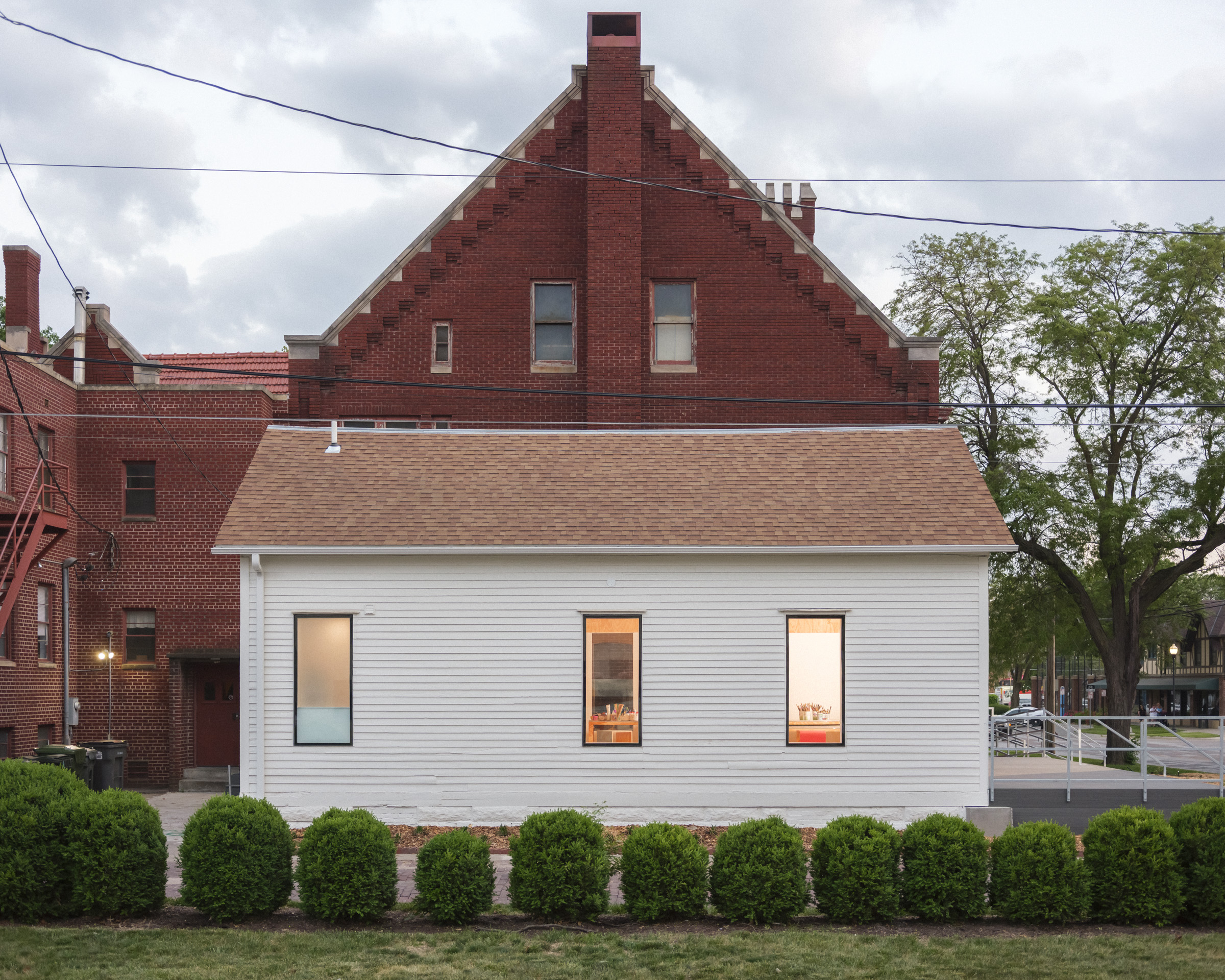
The primary design acts are subtractive - removing material and abstracting the building to highlight its generic qualities and enhance the inherent beauty of its simplicity. Subtraction is a form of direct action on an object that preserves the object’s independence.
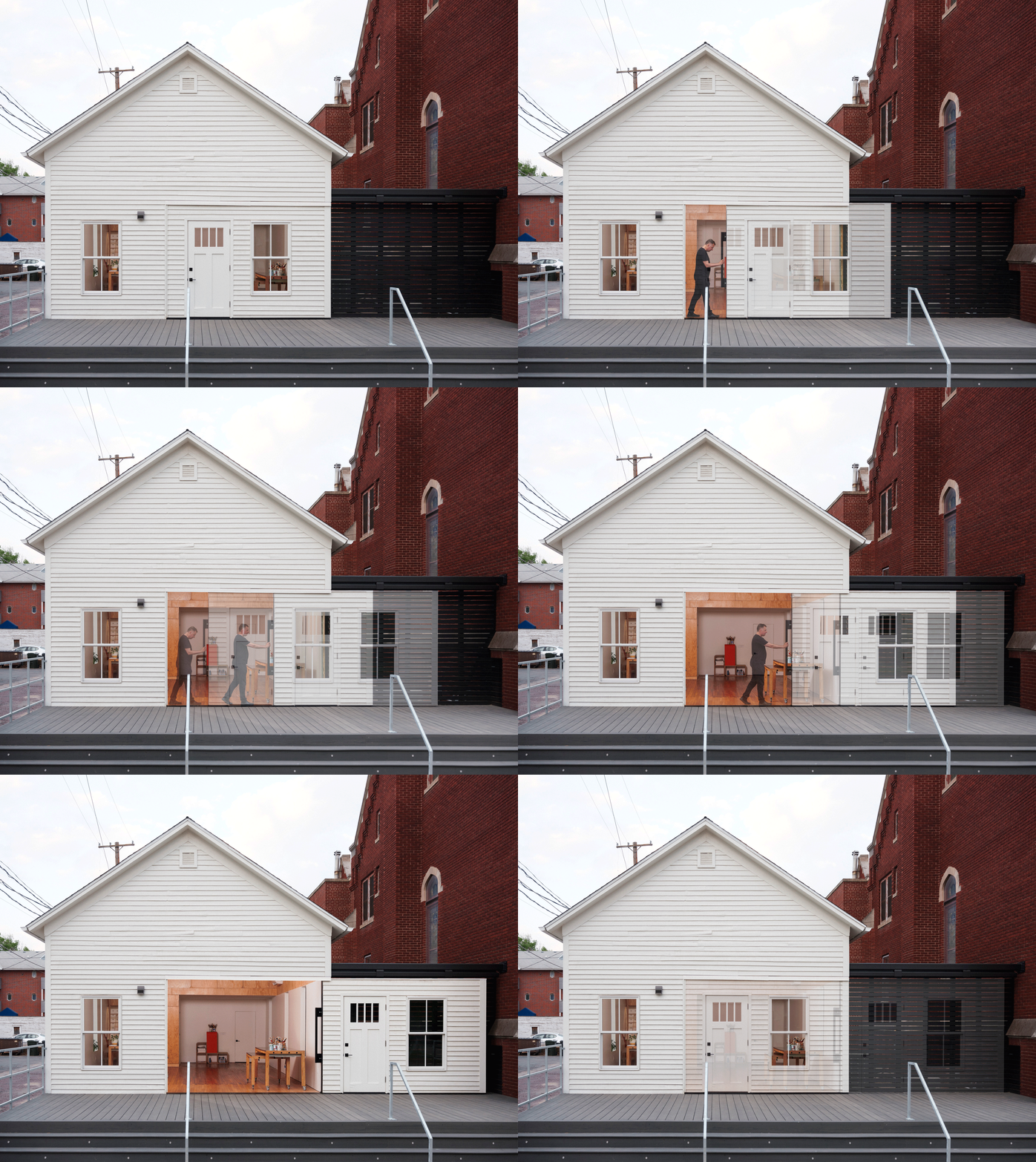
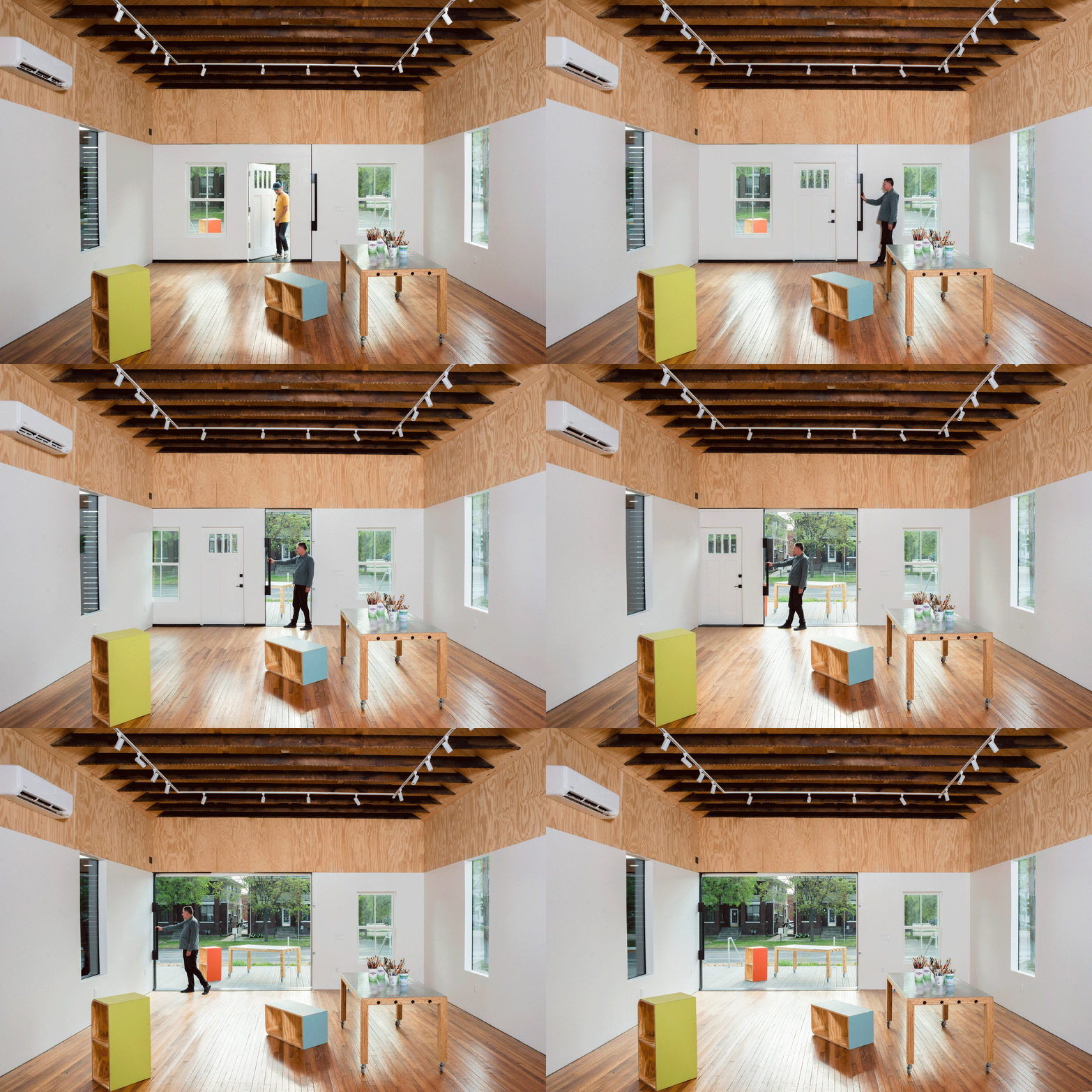
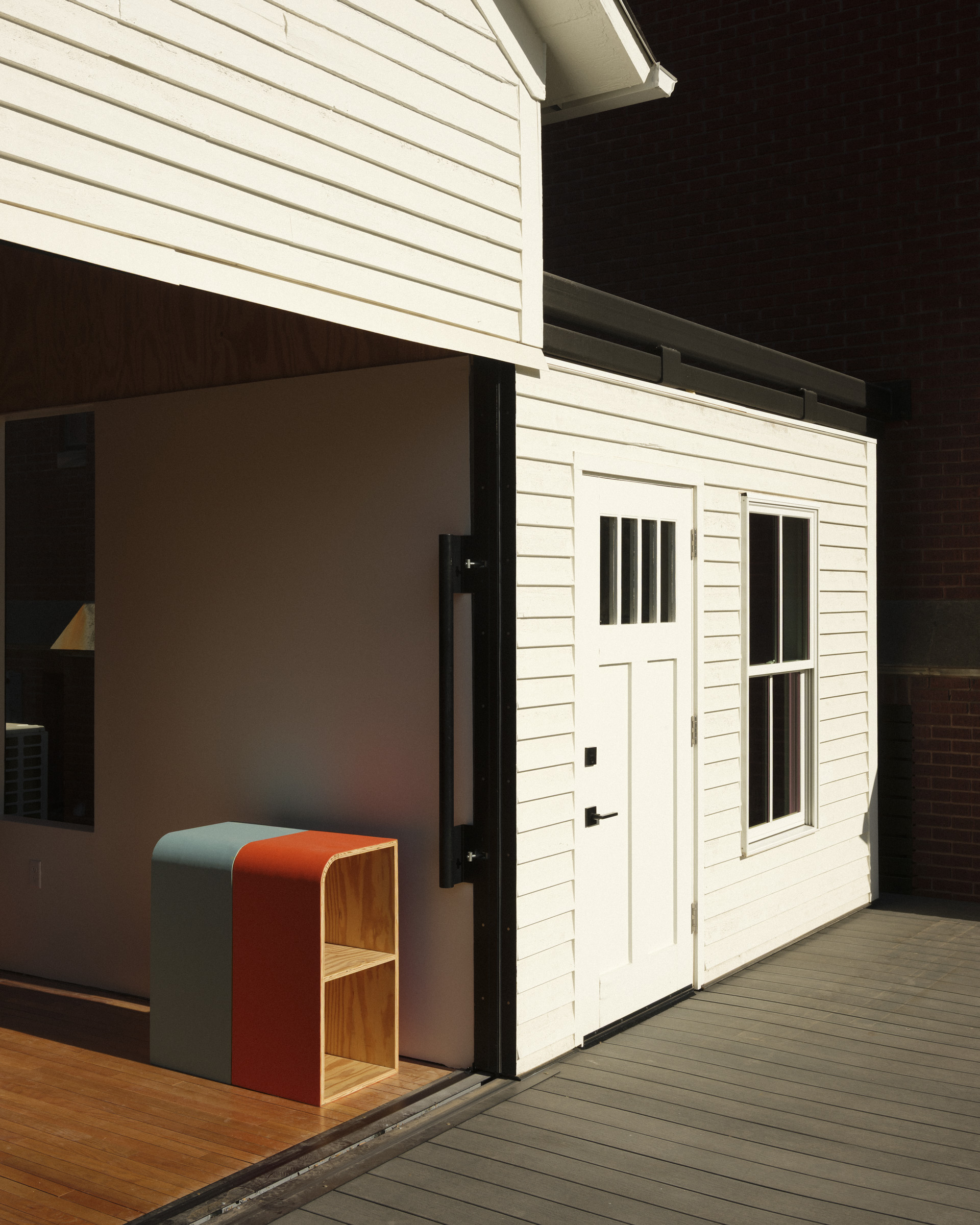
The most distinctive new feature is a large rolling wall that opens the Art Chapel to the community both literally and figuratively. The rolling wall is cut from the existing exterior wall preserving a door and window. The main interior space is a multi use room for art classes and exhibitions. At the back of this room is a new plywood wall that repeats the form of the open street elevation.
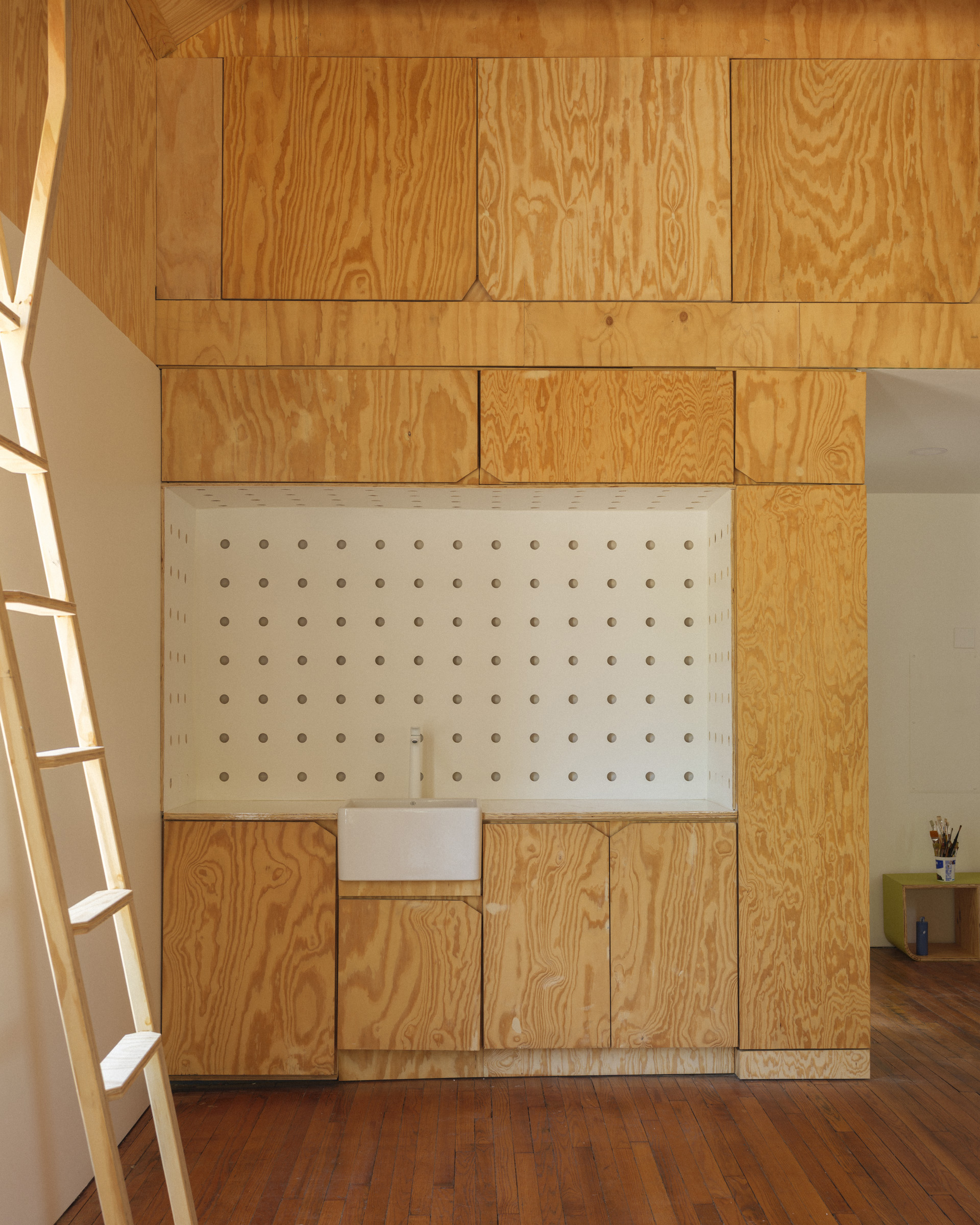
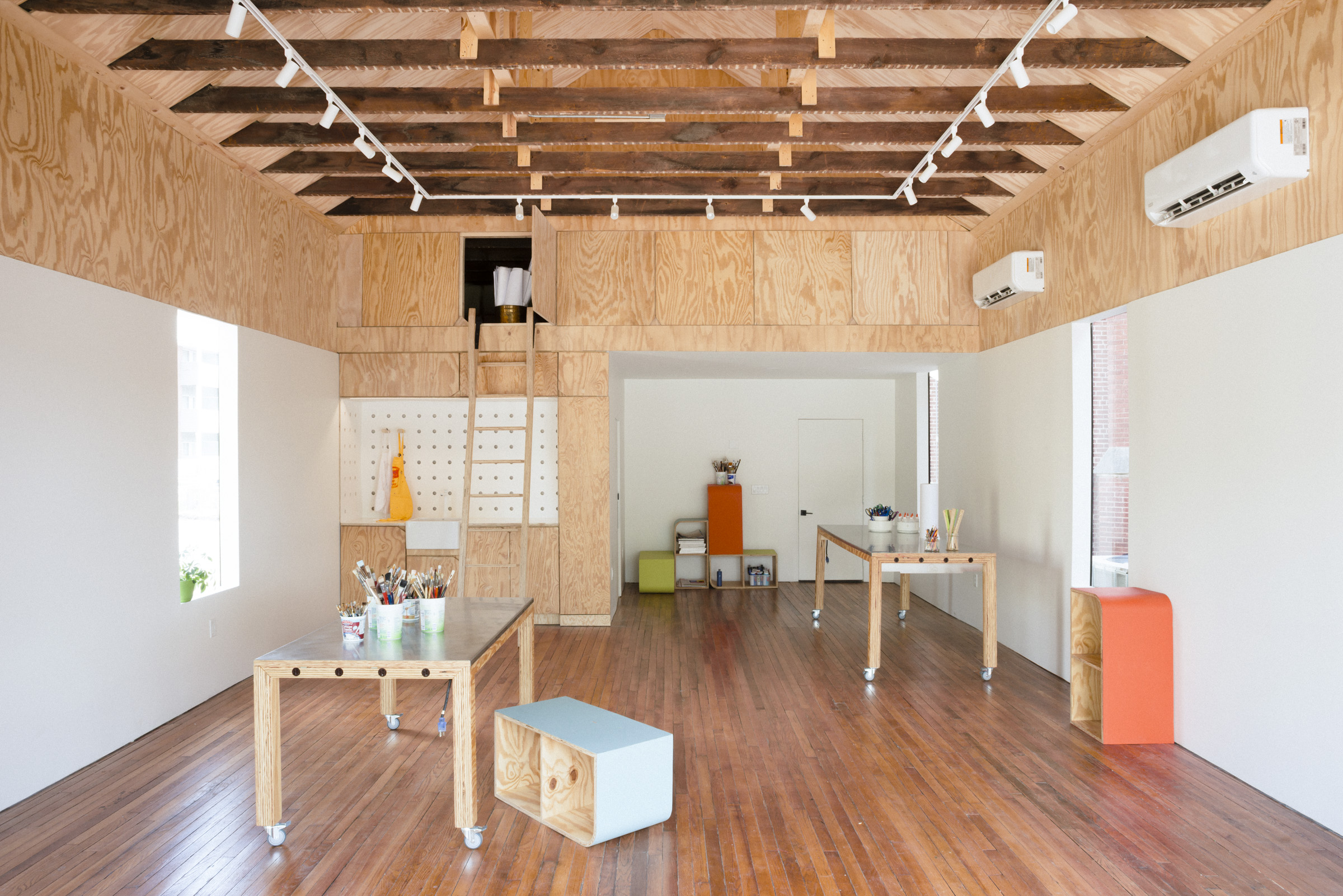
Designing versatile movable furniture was a big part of the project. Custom pieces include powered, nesting work tables (ArTables), stackable bookcases that double as benches, and a rolling ladder. All are built from Fir marine plywood to match the interior sheathing of the building.
Details make the project: the Art Chapel includes many subtle, often hidden details that improve functionality, simplify aesthetics, and reinforce the “build nothing” ethic of adaptive reuse.
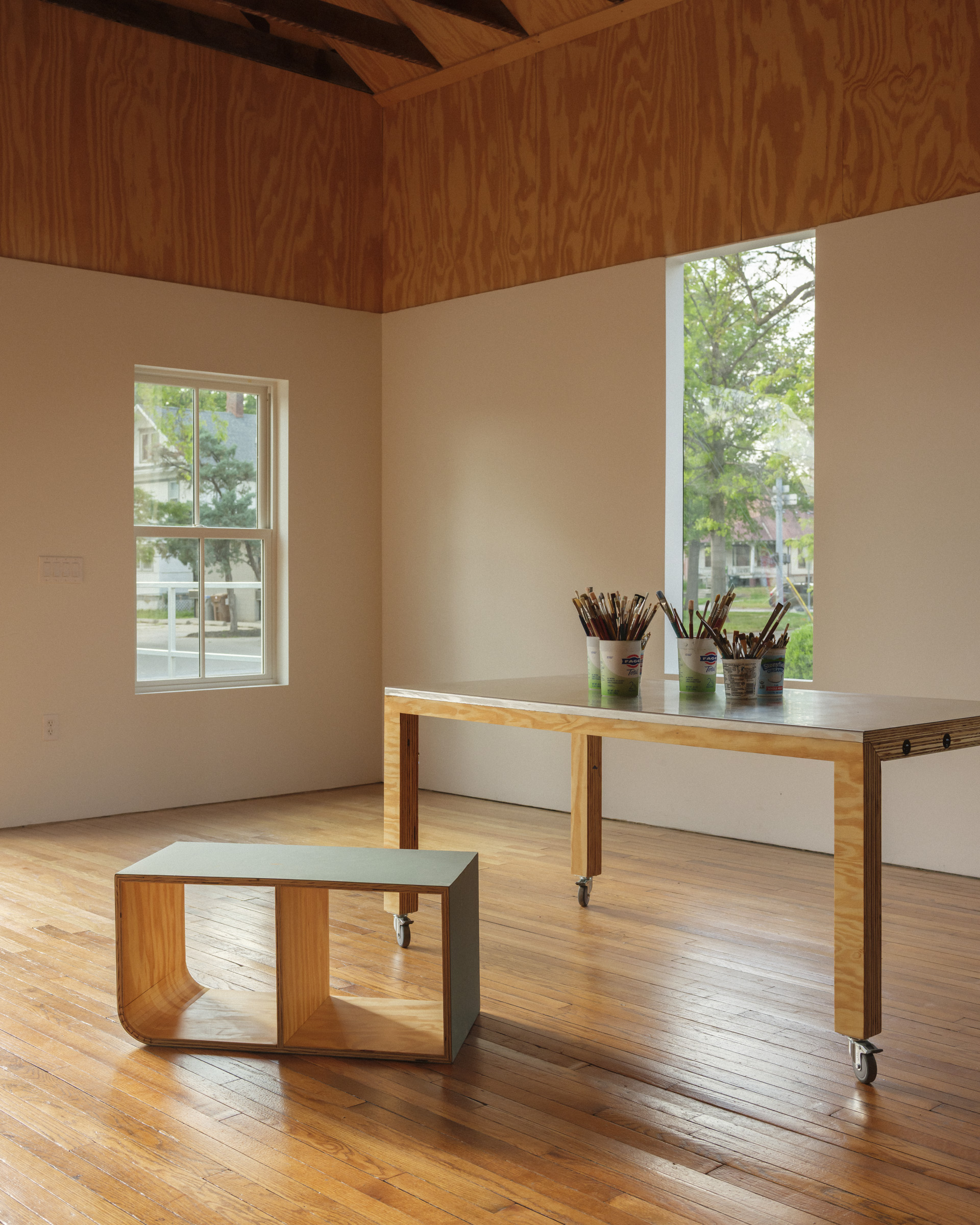
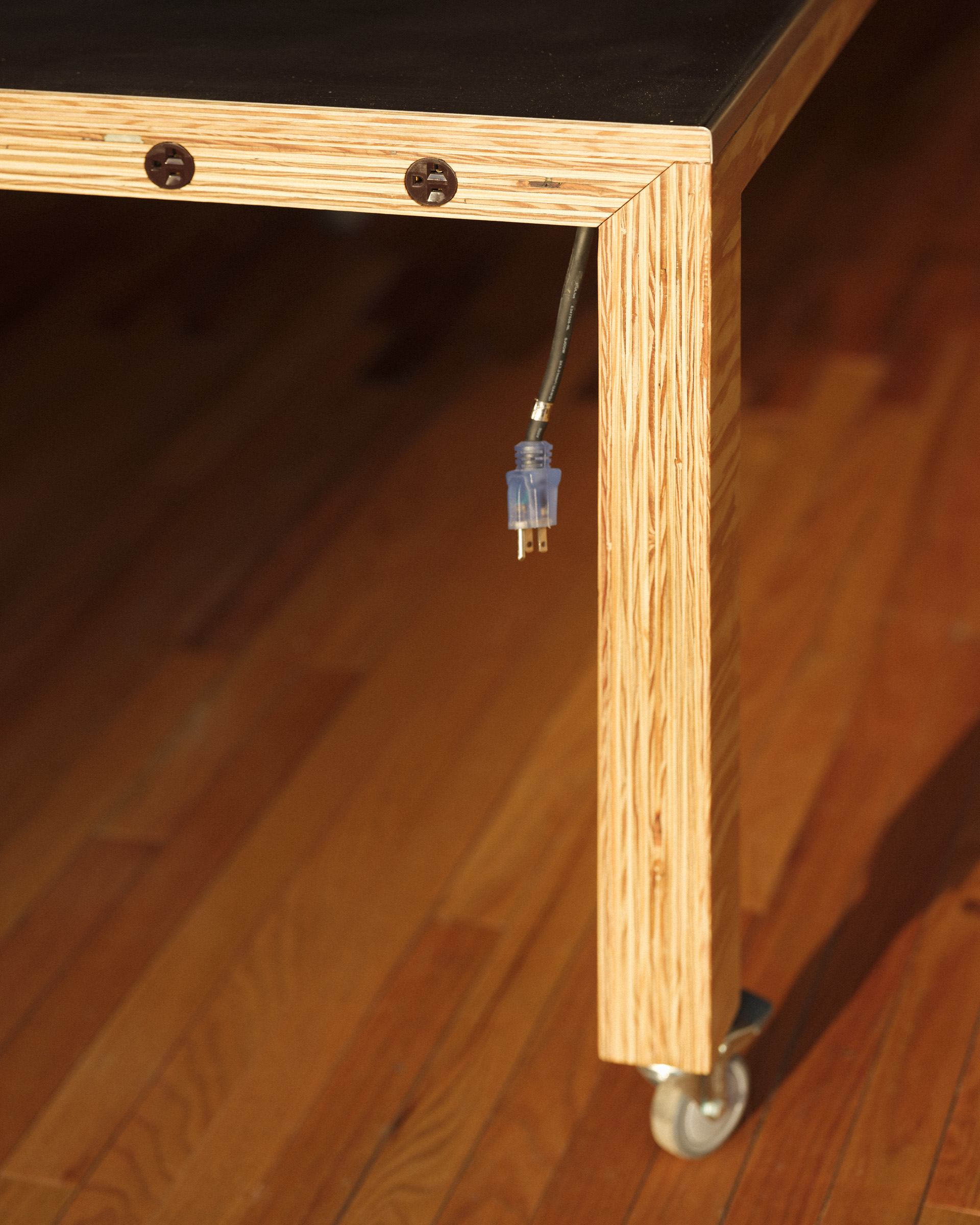
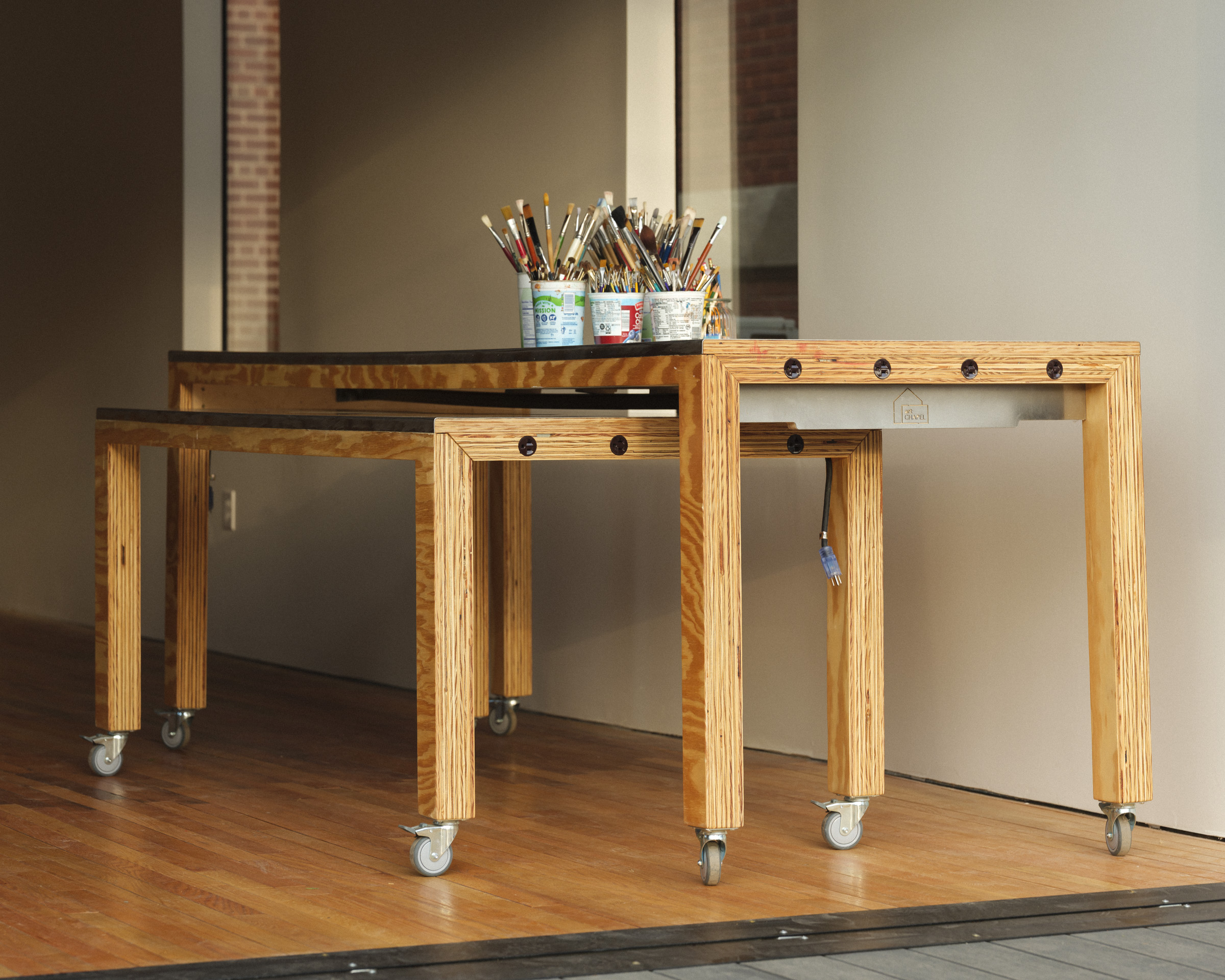
Custom ArTables: Tall and low tables nest when an open gallery space is desired. Each table has build in power outlets for art making equipment.
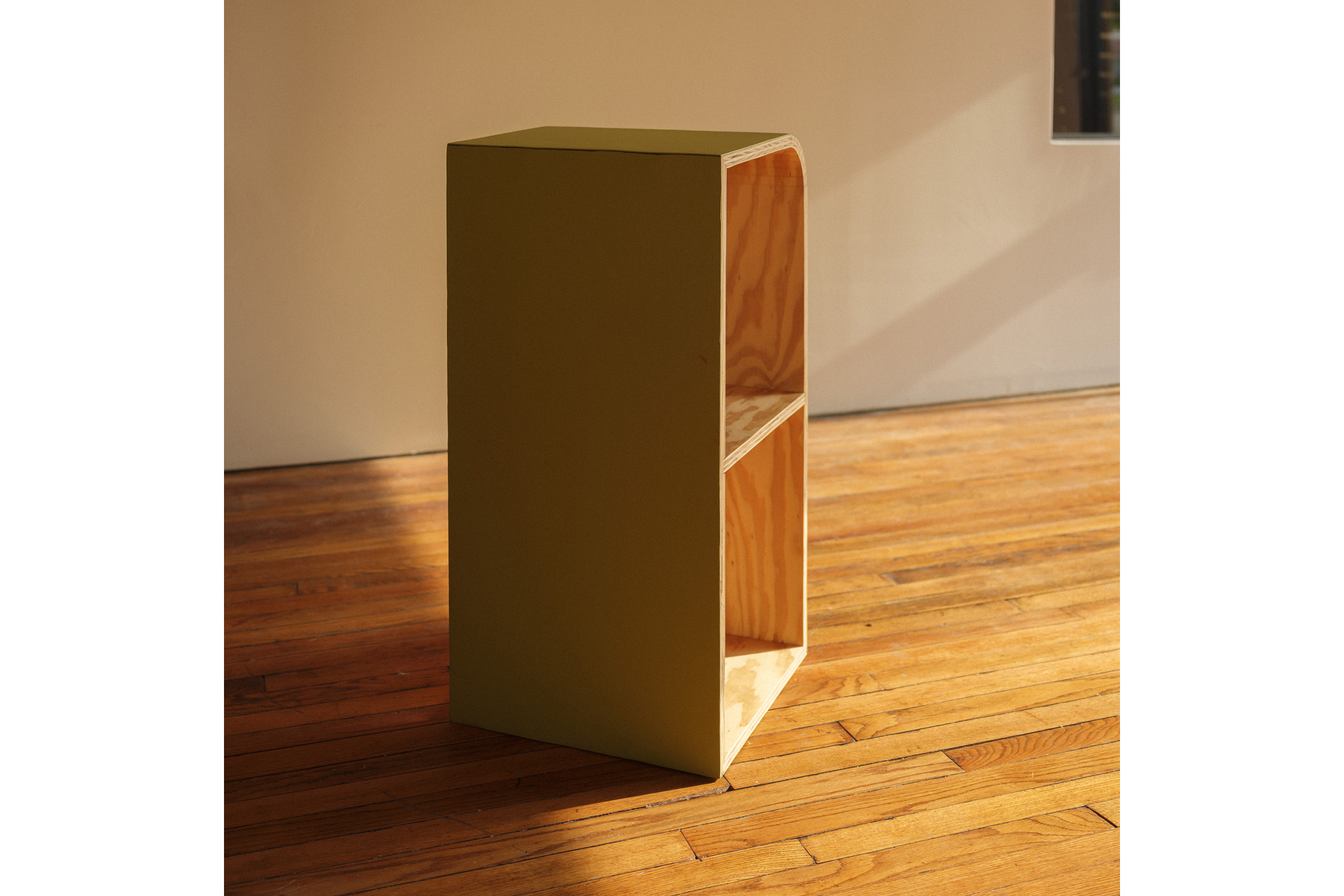
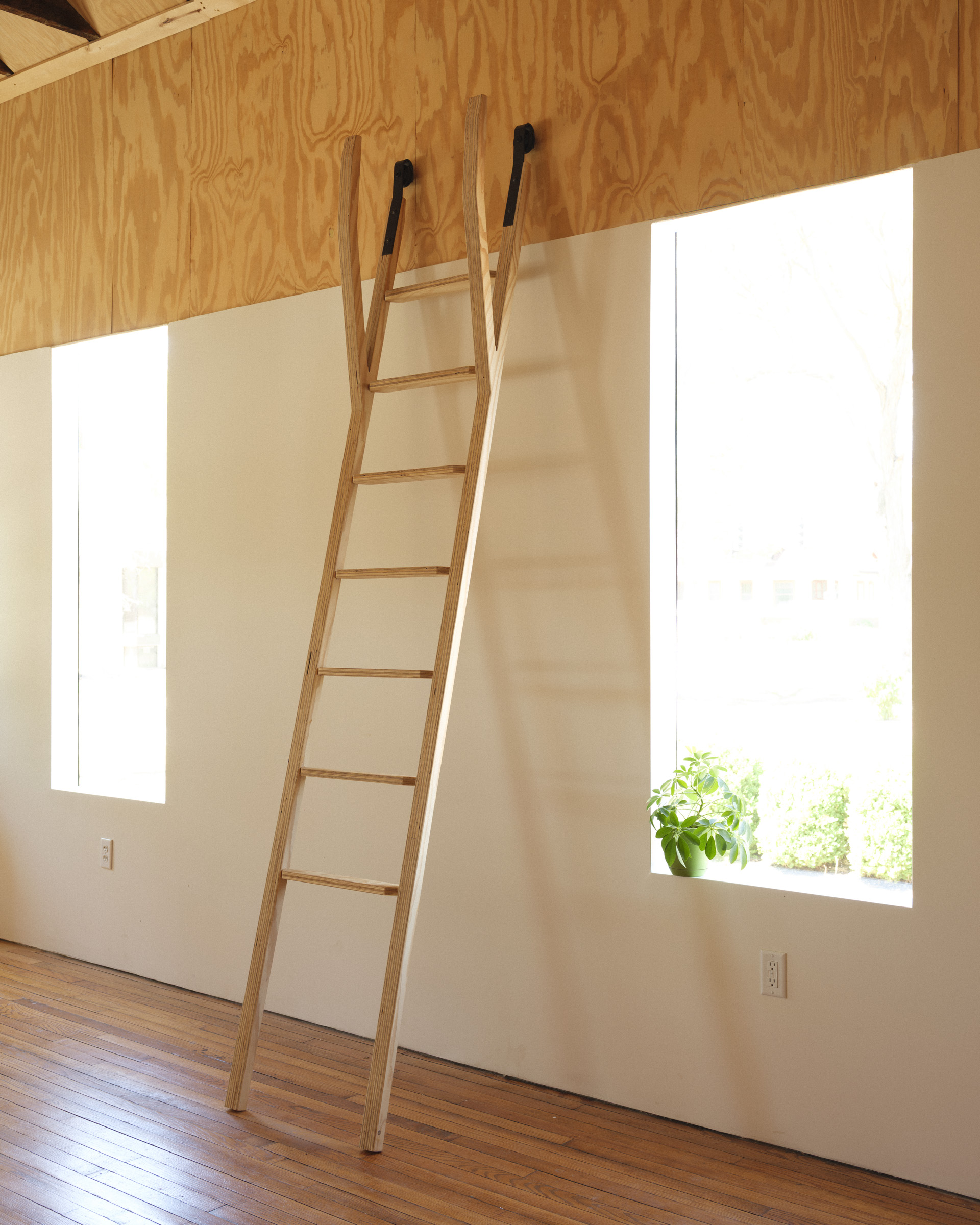
Bookcase-Bench and Rolling Ladder
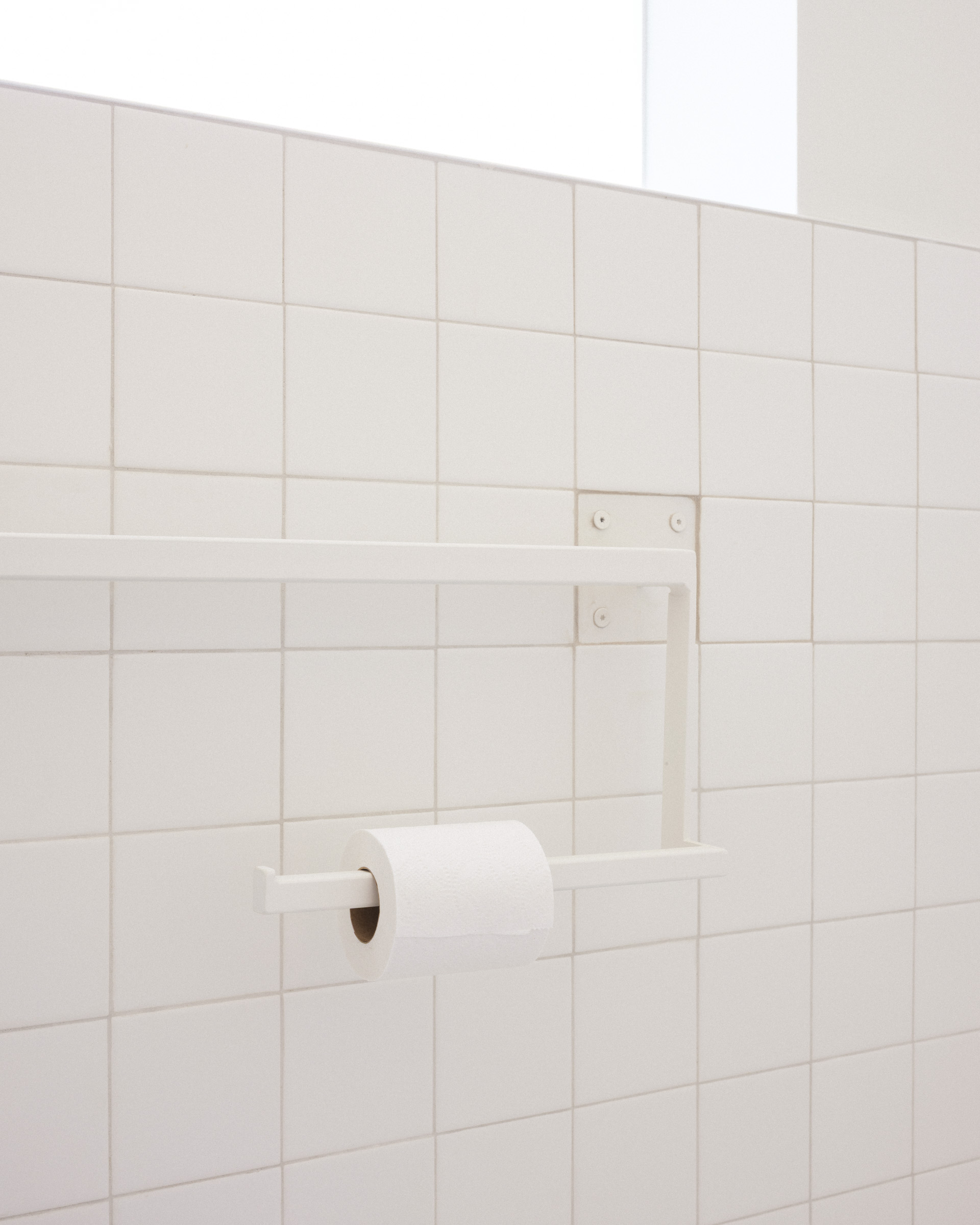
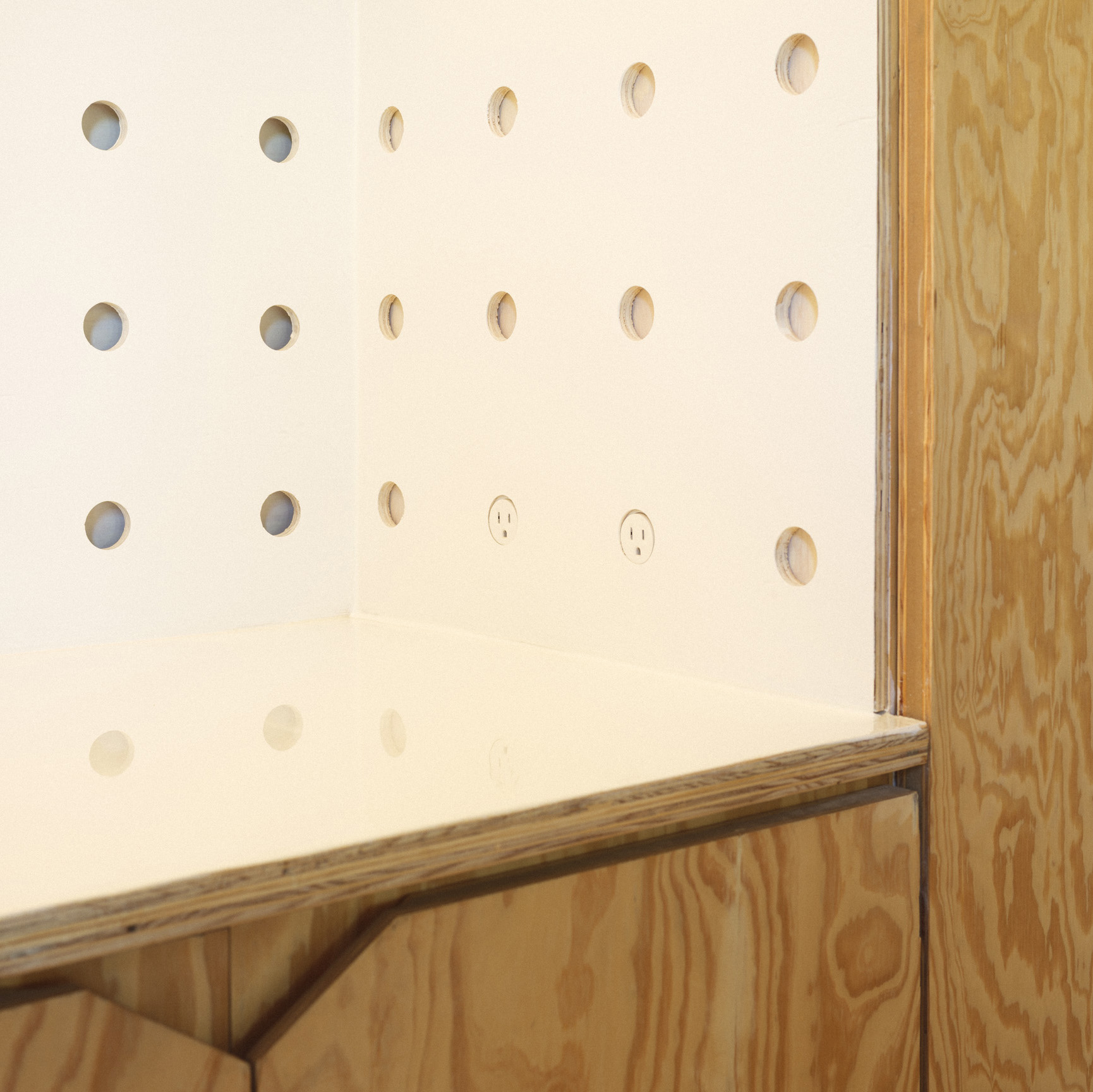
Custom details occur throughout, but all serve the overall project goals and in many cases, students worked to obscure the intensive effort necessary to build with visual restraint
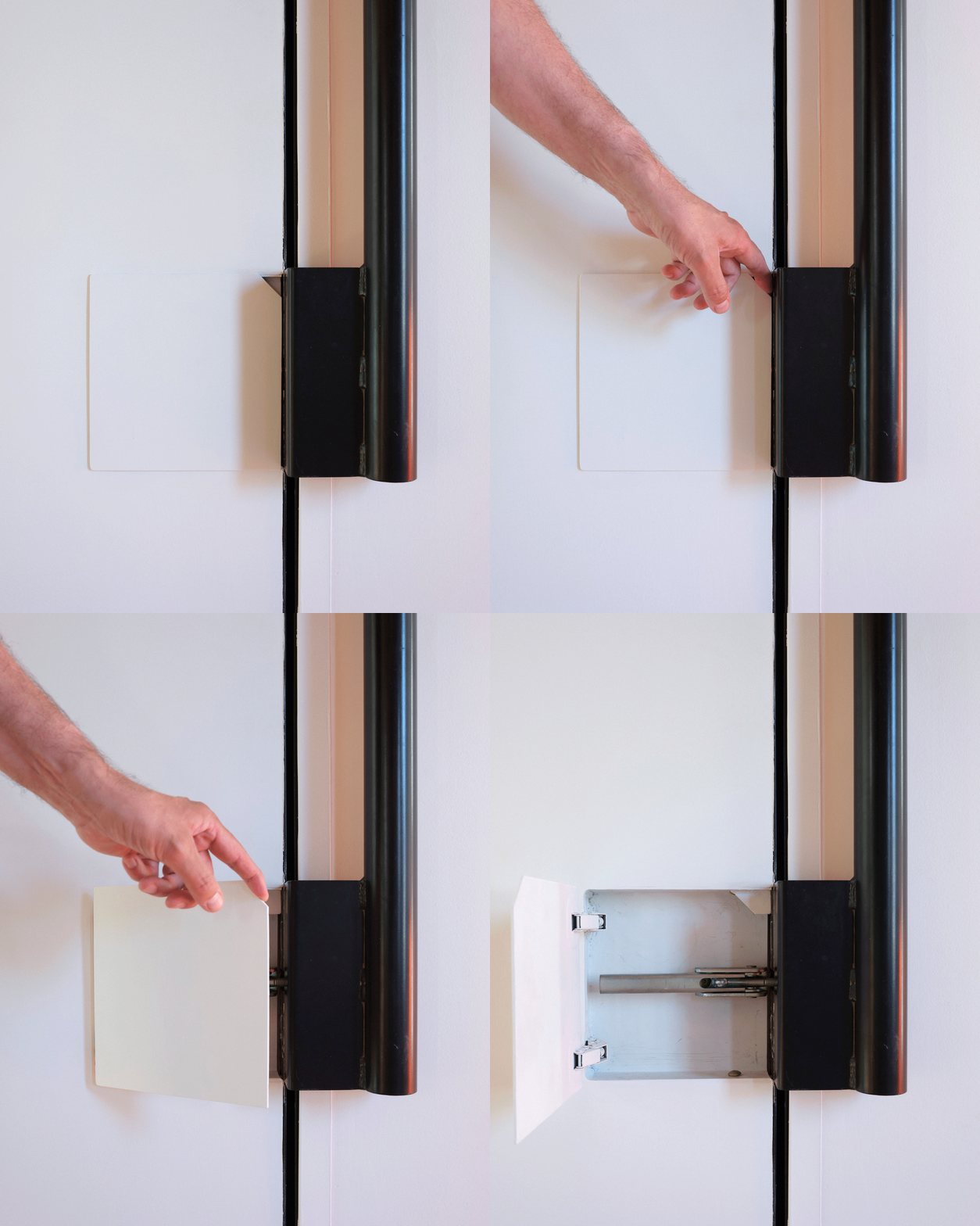
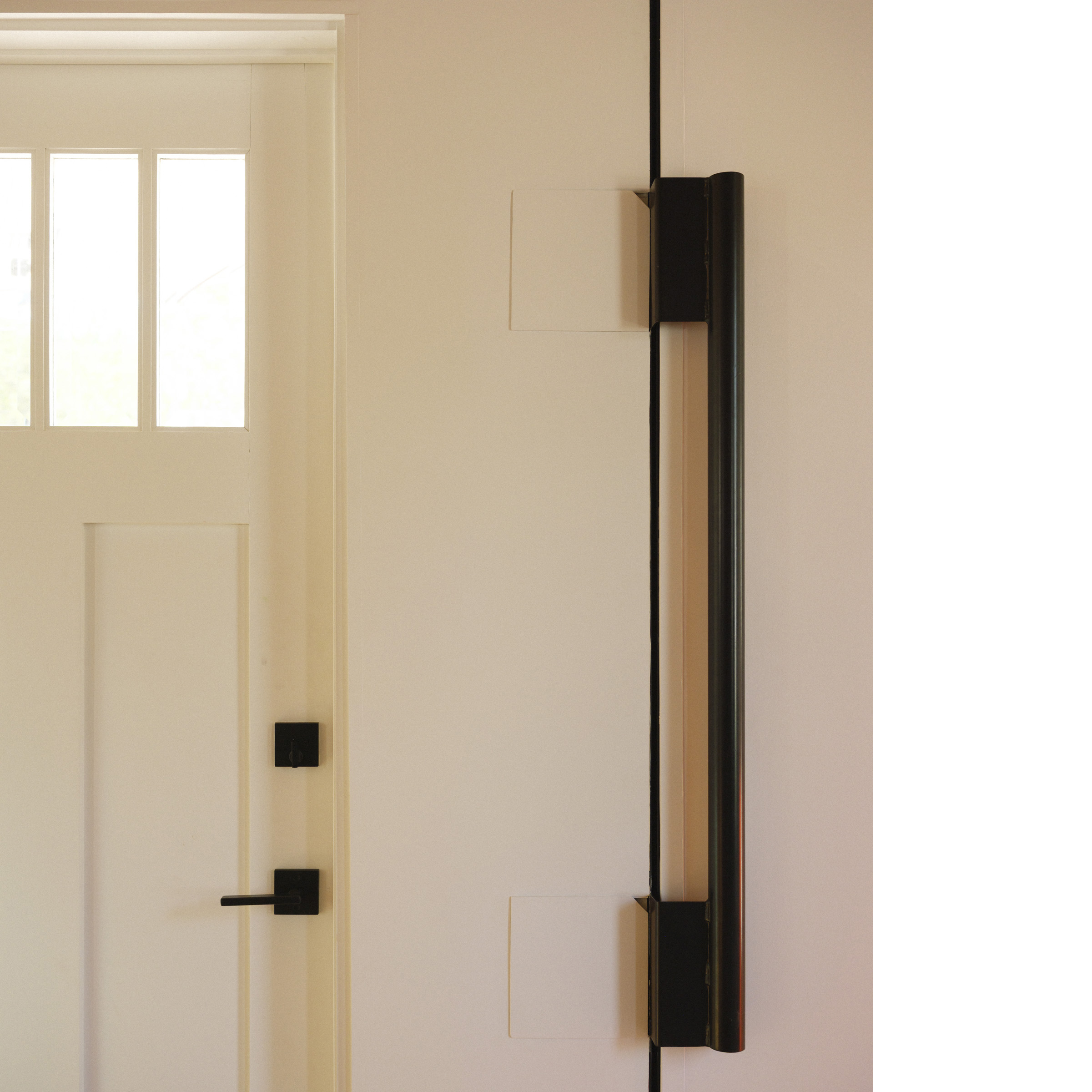
Custom-fabricated concealed latches maintain a "clean" interior appearance and hide security hardware for view

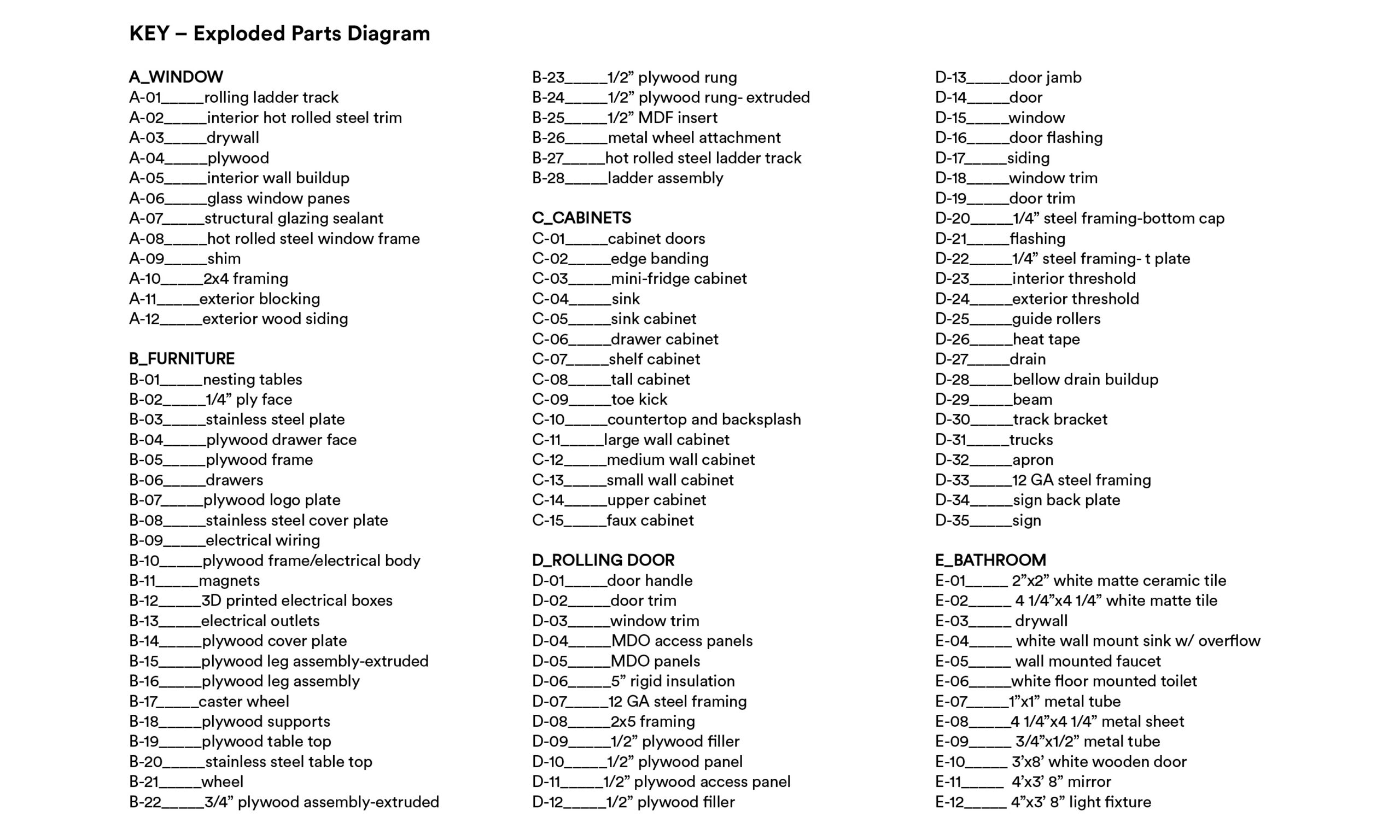
All Parts of The Art Chapel
Project Awards
2025 Architects Newspaper Best of Design Awards (student work)
2025 AIA Nebraska Honor Award
2025 SARA National Design Awards, Honor Award
2025 AIA Central States Region Honor Award
Publications
Lincoln Journal Star, “New Life for Old Chapel” (featuring Art Chapel) by Susie Boyaird, July 15, 2025 (printed above the fold)
View by Category:
View by Type: